Let’s be real — Japanese has a reputation for being one of the hardest languages for English speakers to learn. Three writing systems, completely different grammar structure, and thousands of characters to memorize? It sounds overwhelming.
But here’s the thing: millions of people just like you have done it, and you can too. The secret isn’t some special talent for languages — it’s knowing where to start and how to keep going when things get tough. This guide will walk you through exactly that.

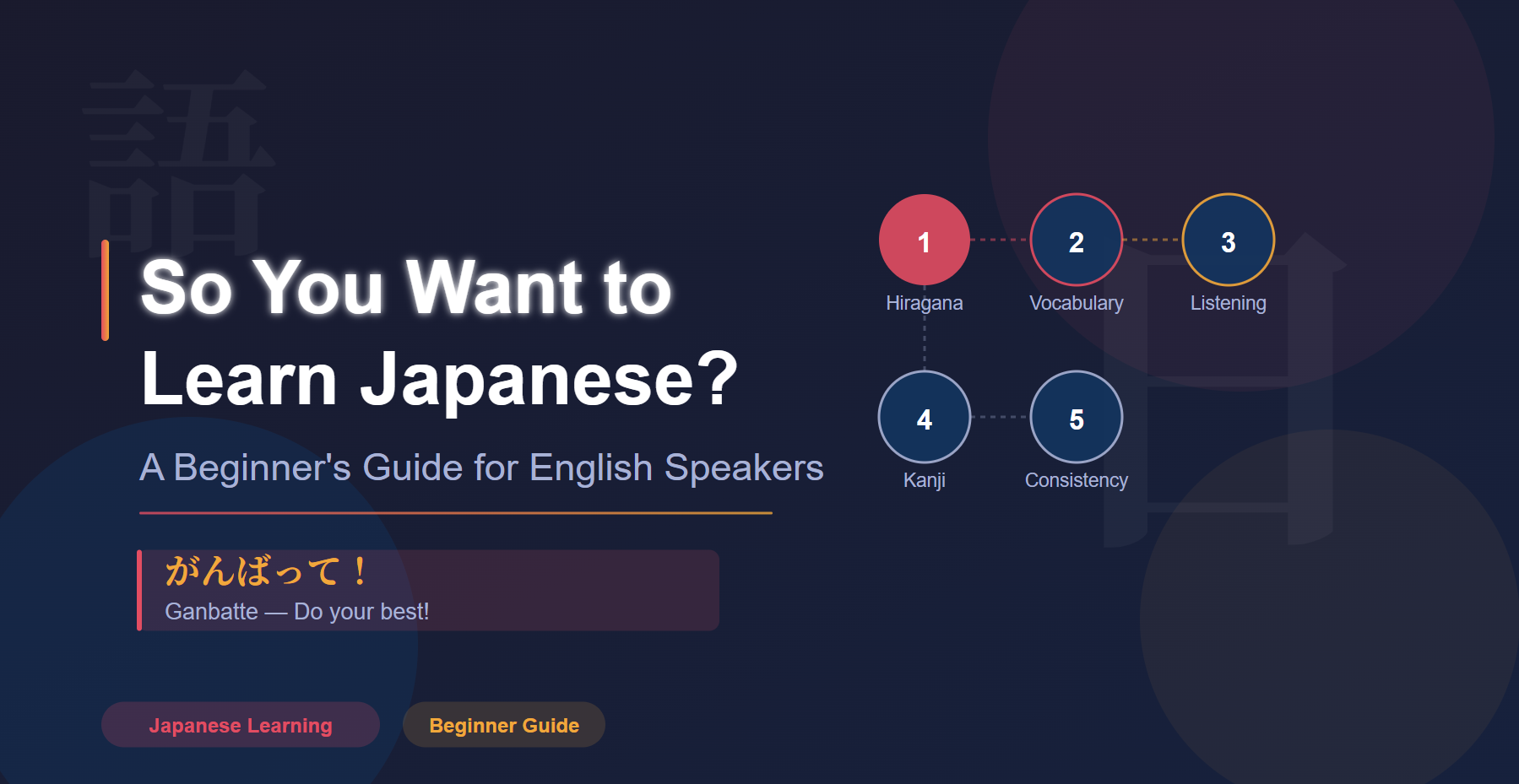
Step 1: Get Comfortable with Hiragana and Katakana First
Before you do anything else, learn hiragana and katakana — the two phonetic alphabets that form the backbone of Japanese writing. Each has 46 basic characters, and together they cover every sound in the language.
Don’t let this intimidate you. Most learners can get through both alphabets in about two weeks with consistent daily practice. Apps like Duolingo or flashcard tools like Anki make this surprisingly painless.
Why start here? Because once you can read these scripts, you stop relying on romanized Japanese (called romaji), which actually slows your learning down in the long run. Trust the process.
Step 2: Pick Up Some Basic Vocabulary and Phrases
Once you’ve got hiragana and katakana down, start building your vocabulary. Don’t try to learn everything at once — focus on high-frequency words and everyday phrases that you’ll actually use.
A few great places to start:
- Greetings: こんにちは (konnichiwa — hello), ありがとう (arigatou — thank you)
- Numbers: Learn 1–10, then expand from there
- Common verbs: 食べる (taberu — to eat), 行く (iku — to go), 見る (miru — to see)
At this stage, don’t stress too much about grammar. Focus on getting words to stick first.
Step 3: Start Listening — A Lot
Here’s something a lot of beginner learners skip: listening practice. Japanese pronunciation and rhythm can feel really foreign at first, and the only way to get used to it is to hear it often.
Some easy ways to do this:
- Watch Japanese shows or anime with subtitles (yes, this counts as studying!)
- Listen to beginner Japanese podcasts like JapanesePod101
- Shadow native speakers — listen to a phrase and repeat it out loud right after
You don’t have to understand everything. Just getting your ears used to the sounds and flow of the language makes a big difference later on.
Step 4: Don’t Fear Kanji — But Don’t Rush It Either
Kanji (the Chinese-origin characters used in Japanese) is where a lot of learners get discouraged. There are thousands of them, and yes, you do need to learn quite a few to become fluent.
But here’s the good news: you don’t need to tackle kanji from day one. Start with the most common ones gradually, and use spaced repetition tools like Anki or the WaniKani app to make it manageable. Many learners find it helpful to learn kanji in context — seeing them used in real sentences rather than memorizing them in isolation.
Step 5: Stay Consistent (Even When It’s Just 10 Minutes)
The biggest factor in language learning success isn’t how many hours you study in a single session — it’s how consistently you show up. Ten minutes every day beats two hours once a week, hands down.
Find small ways to work Japanese into your daily routine:
- Change your phone’s language settings to Japanese
- Label household items with sticky notes in Japanese
- Follow Japanese creators on social media
The goal is to make Japanese a part of your life, not just a textbook exercise.
You’ve Got This
Learning Japanese is a marathon, not a sprint — but it’s one of the most rewarding things you can take on. Every small win, whether it’s reading your first sign or understanding a word in a show, adds up.
Start small, stay curious, and enjoy the ride. がんばって!(Ganbatte! — Do your best!)
Have questions about getting started with Japanese? Drop them in the comments below!
